Tainan Confucius Temple
À propos de cette expérience
<p>The Tainan Confucius Temple was built in 1665. Over the past 300 years, it has undergone several major renovations, making it a spectacular Confucian temple in Taiwan and a designated historical site. Besides tourists, most visitors are students, seeking blessings for their studies.</p><p><img src="https://dimg04.tripcdn.com/images/0354512000nya7w9m10E2_Z_1000_0.jpg"></p><p>Taiwan's first school</p><p><img src="https://dimg04.tripcdn.com/images/0352512000nya7ndm4D15_Z_1000_0.jpg"></p><p>Taiwan's First School - Dachengfang: The name "Dachengfang" comes from Confucius' title of "Great Sage and Teacher," a tribute to his virtue. The fang is a gatehouse, with a cross-shaped load-bearing wall for added stability. Six dovetail ridges rise from the top of the wall, supporting the hipped roof. A plaque inscribed "Taiwan's First School" hangs atop the fang, truly embodying the island's reputation as Taiwan's first Confucius Temple. Embedded in the left wall of the Dachengfang is a "dismounting tablet" welcoming visitors. A high, red wall surrounds the temple. Confucius lived during the Zhou Dynasty, and contemporary culture revered the color red. Crowns, robes, and palaces were adorned with this noble red, a color also found on the walls of the Confucius Temple.</p><p><img src="https://dimg04.tripcdn.com/images/0354h12000nya7ht1BC9A_Z_1000_0.jpg"></p><p>Dacheng Hall: The high walls are also called "palace walls," a reference to an allusion in the Analects of Confucius: Zigong compared learning to "palace walls," his own walls reaching his shoulders, while Confucius's were several ren high. One ren is seven feet, and several ren is quite a height. Later generations even compared Confucius's knowledge to "the palace walls of the people." Passing the Pan Palace stone archway and the ten-thousand-ren palace walls, one enters the East Dacheng Archway and glimpses the beauty of the hall. The spacious and open space, with towering ancient trees, has earned the reputation of "Xingtan Summer Shade." The side of the archway once housed an official office and a land temple. Due to years of disuse, it is now a "Cultural Relics Exhibition Room," with an administrator's office located adjacent.</p><p>The Confucius Temple, also known as the "Confucius Temple," is a traditional courtyard building with three halls and two wings. It evolved according to the traditional temple-style layout of "school on the left, temple on the right," and "hall in front, pavilion in the back." However, through numerous renovations and the passage of time, some structures have been destroyed by natural disasters or war. For example, the Zhuzi Shrine, Lingxing Gate, the Professor's Pavilion, and the school office have all vanished, leaving only empty spaces. Most of what remains today is a reconstruction from 1917, the sixth year of the Taisho era (1917), largely maintaining the style and specifications of the Qing Dynasty. This temple is Taiwan's first Confucius Temple and a representative example of traditional Minnan-style architecture.</p><p><img src="https://dimg04.tripcdn.com/images/0352u12000nya7tt43340_Z_1000_0.jpg"></p><p>Minglun Hall: "Zuoxue" refers to Minglun Hall, located to the left of the Dacheng Hall in the Confucius Temple. It was the site of Taiwan's provincial academy. Here, incoming students received guidance from professors, cultivating their character and ambitions, and deliberating on policy. The banners above Minglun Hall's three gates read "Gate of Virtue," "Sacred Realm," and "Gate of Virtue." Passing through these gates and gazing upward, students are reminded of the Confucian emphasis on moral cultivation and the aspiration to sagehood through the spatial allusions.</p><p><img src="https://dimg04.tripcdn.com/images/0352e12000nya7udn9191_Z_1000_0.jpg"></p><p>Dacheng Gate and Dacheng Hall: Dacheng Gate is the most magnificent of the Confucius Temple's architectural complex. Its pillars are not inscribed with couplets, a design meant to avoid the scorn of "showing off before Confucius." Each pair of door panels is adorned with 108 nails. Nine is the ultimate yang number, and multiples of this represent the temple's majesty and reverence, a distinction worthy of an emperor. At each end of the Dacheng Hall's main ridge are two "scripture cylinders," also known as "pillars reaching heaven," symbolizing Confucius's virtue, equal to heaven and earth, and his teachings, which transcend time and space. Eight bells hang from the four corners of the double-eaved eaves, signifying that Heaven will use Confucius as a wooden bell to awaken the world.</p><p><img src="https://dimg04.tripcdn.com/images/0351412000nya7jfu62FB_Z_1000_0.jpg"></p><p>Wenchang Pavilion: Wenchang Pavilion, also known as "Kuixing Tower", is located to the left and rear of Minglun Hall. It is the only tower-shaped building in the Confucius Temple complex.</p><p><img src="https://dimg04.tripcdn.com/images/0354n12000nya83gy309B_Z_1000_0.jpg"></p><p>Pangong Stone Archway: "Pangong" symbolizes the location of a school. Students admitted through the county examination and entering the school (Pangong) were called "shengyuan." "Entering the Pan," "visiting the Pan," "picking celery," or "traveling on the Panshui" all refer to students' matriculation. The Pangong Stone Archway was originally the outermost entrance to the Tainan Confucius Temple. During the Japanese colonial period, it was moved eastward due to the construction of Nanmen Road. It now faces Dacheng Archway, the "First School in Taiwan," across Nanmen Road from the Confucius Temple.</p>
À quoi s'attendre
<p>The Tainan Confucius Temple was built in 1665. Over the past 300 years, it has undergone several major renovations, making it a spectacular Confucian temple in Taiwan and a designated historical site. Besides tourists, most visitors are students, seeking blessings for their studies.</p><p><img src="https://dimg04.tripcdn.com/images/0354512000nya7w9m10E2_Z_1000_0.jpg"></p><p>Taiwan's first school</p><p><img src="https://dimg04.tripcdn.com/images/0352512000nya7ndm4D15_Z_1000_0.jpg"></p><p>Taiwan's First School - Dachengfang: The name "Dachengfang" comes from Confucius' title of "Great Sage and Teacher," a tribute to his virtue. The fang is a gatehouse, with a cross-shaped load-bearing wall for added stability. Six dovetail ridges rise from the top of the wall, supporting the hipped roof. A plaque inscribed "Taiwan's First School" hangs atop the fang, truly embodying the island's reputation as Taiwan's first Confucius Temple. Embedded in the left wall of the Dachengfang is a "dismounting tablet" welcoming visitors. A high, red wall surrounds the temple. Confucius lived during the Zhou Dynasty, and contemporary culture revered the color red. Crowns, robes, and palaces were adorned with this noble red, a color also found on the walls of the Confucius Temple.</p><p><img src="https://dimg04.tripcdn.com/images/0354h12000nya7ht1BC9A_Z_1000_0.jpg"></p><p>Dacheng Hall: The high walls are also called "palace walls," a reference to an allusion in the Analects of Confucius: Zigong compared learning to "palace walls," his own walls reaching his shoulders, while Confucius's were several ren high. One ren is seven feet, and several ren is quite a height. Later generations even compared Confucius's knowledge to "the palace walls of the people." Passing the Pan Palace stone archway and the ten-thousand-ren palace walls, one enters the East Dacheng Archway and glimpses the beauty of the hall. The spacious and open space, with towering ancient trees, has earned the reputation of "Xingtan Summer Shade." The side of the archway once housed an official office and a land temple. Due to years of disuse, it is now a "Cultural Relics Exhibition Room," with an administrator's office located adjacent.</p><p>The Confucius Temple, also known as the "Confucius Temple," is a traditional courtyard building with three halls and two wings. It evolved according to the traditional temple-style layout of "school on the left, temple on the right," and "hall in front, pavilion in the back." However, through numerous renovations and the passage of time, some structures have been destroyed by natural disasters or war. For example, the Zhuzi Shrine, Lingxing Gate, the Professor's Pavilion, and the school office have all vanished, leaving only empty spaces. Most of what remains today is a reconstruction from 1917, the sixth year of the Taisho era (1917), largely maintaining the style and specifications of the Qing Dynasty. This temple is Taiwan's first Confucius Temple and a representative example of traditional Minnan-style architecture.</p><p><img src="https://dimg04.tripcdn.com/images/0352u12000nya7tt43340_Z_1000_0.jpg"></p><p>Minglun Hall: "Zuoxue" refers to Minglun Hall, located to the left of the Dacheng Hall in the Confucius Temple. It was the site of Taiwan's provincial academy. Here, incoming students received guidance from professors, cultivating their character and ambitions, and deliberating on policy. The banners above Minglun Hall's three gates read "Gate of Virtue," "Sacred Realm," and "Gate of Virtue." Passing through these gates and gazing upward, students are reminded of the Confucian emphasis on moral cultivation and the aspiration to sagehood through the spatial allusions.</p><p><img src="https://dimg04.tripcdn.com/images/0352e12000nya7udn9191_Z_1000_0.jpg"></p><p>Dacheng Gate and Dacheng Hall: Dacheng Gate is the most magnificent of the Confucius Temple's architectural complex. Its pillars are not inscribed with couplets, a design meant to avoid the scorn of "showing off before Confucius." Each pair of door panels is adorned with 108 nails. Nine is the ultimate yang number, and multiples of this represent the temple's majesty and reverence, a distinction worthy of an emperor. At each end of the Dacheng Hall's main ridge are two "scripture cylinders," also known as "pillars reaching heaven," symbolizing Confucius's virtue, equal to heaven and earth, and his teachings, which transcend time and space. Eight bells hang from the four corners of the double-eaved eaves, signifying that Heaven will use Confucius as a wooden bell to awaken the world.</p><p><img src="https://dimg04.tripcdn.com/images/0351412000nya7jfu62FB_Z_1000_0.jpg"></p><p>Wenchang Pavilion: Wenchang Pavilion, also known as "Kuixing Tower", is located to the left and rear of Minglun Hall. It is the only tower-shaped building in the Confucius Temple complex.</p><p><img src="https://dimg04.tripcdn.com/images/0354n12000nya83gy309B_Z_1000_0.jpg"></p><p>Pangong Stone Archway: "Pangong" symbolizes the location of a school. Students admitted through the county examination and entering the school (Pangong) were called "shengyuan." "Entering the Pan," "visiting the Pan," "picking celery," or "traveling on the Panshui" all refer to students' matriculation. The Pangong Stone Archway was originally the outermost entrance to the Tainan Confucius Temple. During the Japanese colonial period, it was moved eastward due to the construction of Nanmen Road. It now faces Dacheng Archway, the "First School in Taiwan," across Nanmen Road from the Confucius Temple.</p>
À noter
- This ticket is valid for one person per ticket
- Visitors must comply with these guidelines
- Eating, drinking, smoking, littering, or any other behavior that affects visitors' rights or safety is prohibited inside the Dacheng Hall.
- Unauthorized gatherings, speeches, parades, solicitation, distribution of advertisements, promotional materials, or other commercial activities are prohibited in the park without permission from the foundation.
- If redemption is not possible during that time, please redeem during other regular business hours within the validity period.
- In the event of force majeure (including but not limited to natural disasters such as typhoons, earthquakes, or heavy rain), the organizer may postpone or cancel the activity for public safety reasons with prior notice
- The foundation reserves the right to advise, stop, or deny entry to anyone whose behavior threatens the safety of historical sites or disrupts the visiting order.
- Once any product or gift in the combo ticket has been redeemed, returns or refunds will not be accepted.
- Each e-ticket can only be used once and cannot be reused after verification for entry.
- Please note the redemption store's business hours
- The organizer reserves the right to modify, terminate, or change activity details as necessary.
Ce qu'en disent les visiteurs
12,559 reviews

Quentin Gayrard
Le temple de Confucius à Tainan est un temple à visiter absolument pour les raisons suivantes. 1. c'est le temple de Confucius le plus complet au monde en termes de conservation des plaques impériales des empereurs de la dynastie Qing et des plaques présidentielles de la République de Chine. Il contient 8 plaques impériales à partir de la dynastie Kangxi, à l'exception des Xuanzheng, et 7 plaques de la République de Chine, soit un total de 15 plaques ! La plus célèbre de ces plaques est la "Table des professeurs du monde", rédigée par l'empereur Kangxi. Le temple de Confucius de Tainan est le premier temple de Confucius à Taïwan. Il a été construit en 1665 sous les dynasties Ming et Zheng, et le Minglun Hall situé à côté du temple a été la première école gérée par le gouvernement à Taïwan. L'entrée habituelle du temple Confucius, sur la place Dacheng Est, est donc décorée des mots "La première école de Taïwan". La porte principale du temple de Confucius n'est ouverte que lors des cérémonies officielles. Le temple a été construit à l'origine en 1665, lorsqu'il a été établi pour la première fois à Taïwan, et le fils de Zheng Chenggong, Zheng Jing, a été conseillé par le général Chen Yonghua de construire un temple sacré et d'établir une école nationale dès que possible, afin d'enseigner les talents de la nation et d'achever le projet de restauration. Contrairement aux temples taïwanais modernes et aux monuments rénovés, le temple de Confucius de Tainan présente un caractère architectural simple, épais et austère. Pour ceux qui ne sont pas intéressés par les monuments historiques, ce temple peut certainement être inclus dans la liste des lieux de beauté. Par une journée ensoleillée, le ciel bleu, les arbres verts et l'herbe turquoise contre les anciennes tuiles rouges et les murs rouges, associés à des vêtements blancs ou clairs, constituent un excellent souvenir. Sous la dynastie des Zhou, où est né Confucius, la couleur rouge de la couronne du palais était portée par la noblesse, et les murs carrelés de rouge du temple de Confucius représentaient la révérence et la noblesse. 5) À l'extérieur de la porte ouest du temple, sur la place Dacheng, se trouve la salle Wude la mieux conservée et la plus unique de Taïwan. Pendant l'occupation japonaise, les Japonais ont construit plus de 400 temples Wudeten à Taïwan, qu'ils utilisaient pour prêcher le Bushido traditionnel. Le temple Wudeten de Tainan, construit en 1936, est le mieux préservé et le plus caractéristique. Il a été déclaré monument municipal en 1997 et sa restauration a été achevée entre le 15 octobre 2004 et le 30 juillet 2007. Il est fermé pendant l'épidémie et ne peut être vu que de loin. Visiter deux des sites "Best of Taiwan" en une seule visite est un excellent moyen de découvrir la ville.

Loïc Michot
le Temple de Confucius de Tainan est un site culturel incontournable pour tous ceux qui cherchent à en apprendre davantage sur l'histoire et la culture chinoises. C'est un lieu qui témoigne de la sagesse et de l'héritage de Confucius, ainsi que de la beauté de l'architecture traditionnelle chinoise.

Lenaanel
Magnifique endroit !! À ne pas rater si vous venez à Tainan.

Charles Gendrot
Superbe lieu de recueillement et de prière.

Bénédicte Jobert
Beau temple, manque un peu d'explication en Anglais à mon sens, l'entrée est payante mais seulement 25twd, à ce prix là la visite vaut le coup !
Avis provenant de Google
Réserver cette expérience
Ticket
Choisissez une date
April 2026
Passagers
$0.95 par personne
$0.73 par personne
Choisissez une date
April 2026
Passagers
$0.95 par personne
$0.73 par personne
Cela pourrait également vous intéresser
Tainan
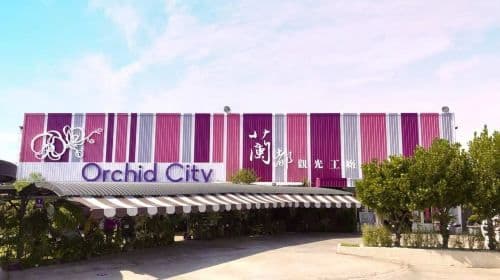
Landu Tourist Factory

Tainan
Liuying Jianshanpi Resort
![[ Exclusive] Changhua Magic Mushroom Tribe Leisure Farm - Double & Family Package: Mushroom DIY Experience, Magic Mushroom Pizza | Taiwan](/_next/image?url=https%3A%2F%2Ftixlayer.com%2Fstorage%2Fattractions%2F6644%2Fsupplier_0.jpg&w=3840&q=75)
Tainan
[ Exclusive] Changhua Magic Mushroom Tribe Leisure Farm - Double & Family Package: Mushroom DIY Experience, Magic Mushroom Pizza | Taiwan
Tainan
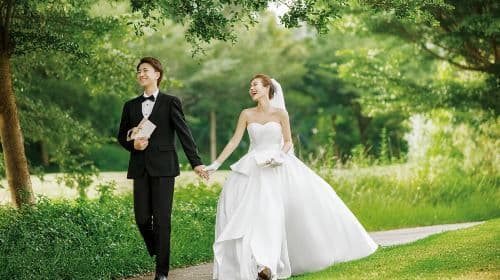
Tainan Travel Photography[Driver and guide + travel photography + wedding photos, aerial photography, micro-film + makeup and Clothes & Accessories+ itinerary customization + unlimited number of peopl