Things to Do in Chiang Rai
5 experiences in Chiang Rai
Get notified about new experiences in Chiang Rai
Be the first to know when we add tours and tickets in Chiang Rai.
About Chiang Rai
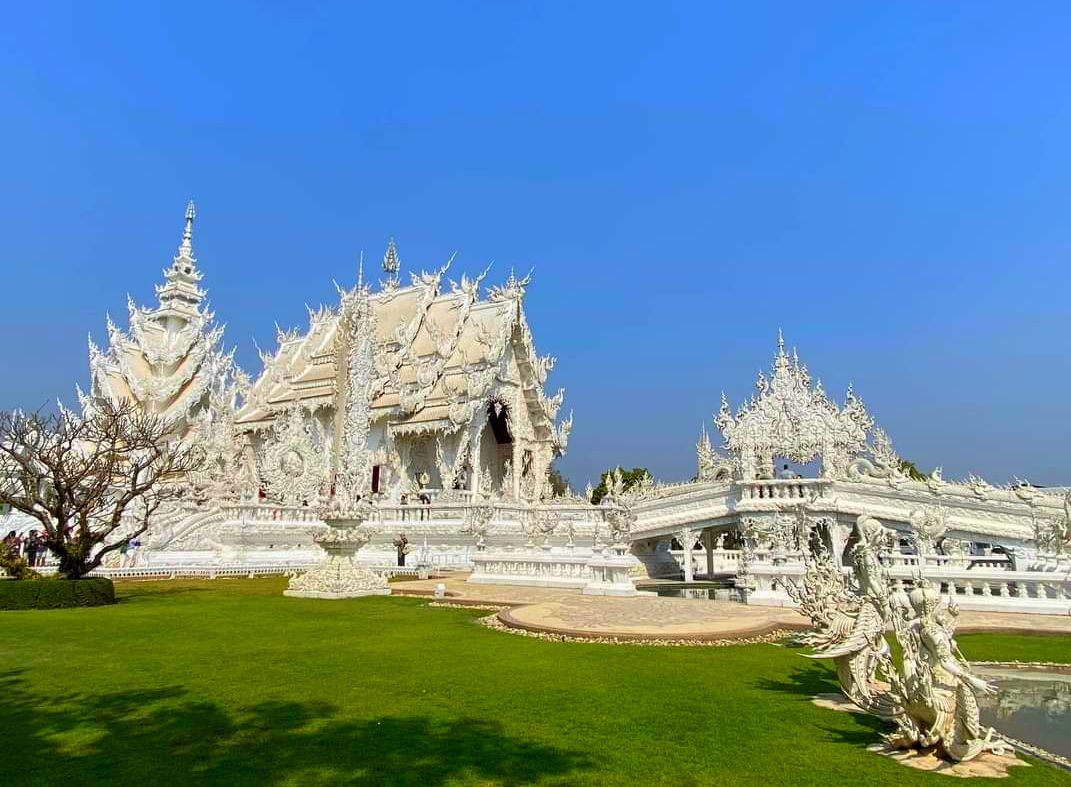
Chiang Rai is what Chiang Mai was two decades ago, before the ring roads and the crowds. Thailand's northernmost major city sits in a highland basin surrounded by tea plantations and the hills of the Golden Triangle, and it moves at a pace that rewards slowing down. This is a place built around a handful of extraordinary temples, most famously the blinding-white Wat Rong Khun and the electric-blue Wat Rong Suea Ten, both contemporary works by living artists rather than ancient relics — a distinction that surprises a lot of first-time visitors expecting only old stone ruins.
The city itself is compact and low-rise, with a night bazaar, a walking street market on Saturdays, and enough good coffee shops to remind you that this region grows some of Thailand's best arabica. But Chiang Rai's real pull is what surrounds it: the Mekong river towns of the Golden Triangle where Thailand, Laos and Myanmar meet, misty tea and coffee farms around Doi Mae Salong, and long-neck Karen and Akha hill tribe villages up in the mountains. It's a base for exploration more than a destination to sit still in.
This city suits travelers who've already done Bangkok and Chiang Mai and want somewhere with fewer tour buses. It works well for slow travelers, photographers, road-trippers with a rented motorbike or car, and anyone curious about Thailand's borderlands and hill tribe cultures. It's less suited to people wanting nightlife or beach-adjacent energy — Chiang Rai closes early and the appeal is daytime scenery, temples and drives through the hills, not bars.
Good to Know
- Buy a local SIM (AIS, dtac or True) at the airport arrivals hall — 7-15 days of data runs about 300-400 baht and is far more reliable than relying on hotel wifi for maps and Grab.
- Dress modestly at temples — shoulders and knees covered, and you'll need to remove shoes before entering most temple buildings.
- Cash is still king outside city-center hotels and restaurants — carry baht for markets, songthaews and rural villages where card machines don't exist.
- Tipping isn't mandatory but rounding up taxi fares or leaving 20-50 baht for good restaurant service is appreciated, not expected.
- March to May brings serious air pollution from crop burning — pack a good mask if traveling then, or shift your trip to avoid it entirely.
- Hill tribe village visits should ideally go through a responsible local guide or operator — avoid places that feel like human zoos, and ask beforehand how the community benefits.
- Border crossings at Mae Sai or Chiang Khong require your passport and sometimes an onward visa for Myanmar/Laos — check requirements before you go, rules change often.
- Rent a motorbike only if you're already comfortable riding — hill roads can be steep and winding, and travel insurance often excludes claims without a proper motorcycle license.


![Chiang Rai Day Tour [Best Deals]: Hot Spring, Blue Temple, White Temple, Black house, Long Neck, Singha Park](/_next/image?url=https%3A%2F%2Ftixlayer.com%2Fstorage%2Fattractions%2F911%2Fsupplier_1.jpg&w=3840&q=75)
![[Early Bird Discount] Chiang Rai Day Tour: White and Blue Temples, Golden Triangle](/_next/image?url=https%3A%2F%2Ftixlayer.com%2Fstorage%2Fattractions%2F1294%2Fsupplier_4.jpg&w=3840&q=75)