
Niagara Region Travel Guide: Plan Your Perfect Trip
By Matt Cuckston, Founder & Travel Technology Expert at TixLayer
Few destinations in North America carry the same immediate recognition as the Niagara Region. The falls themselves are only part of the story. Stretch beyond the mist and you'll find wine trails winding through the Niagara Escarpment, charming towns like Niagara-on-the-Lake, and a range of outdoor and cultural experiences that make this area worth more than a single afternoon. This Niagara Region travel guide covers everything you need to know to plan a trip that goes well beyond the standard tourist checklist, including things to do in Niagara Region that most visitors overlook.
Getting There
Niagara Falls, New York sits roughly 20 miles north of Buffalo and about 90 miles southeast of Toronto, making it accessible from multiple directions.
By Air: Buffalo Niagara International Airport (BUF) is the closest major airport on the US side, about 30 minutes from the falls by car. Toronto Pearson International (YYZ) is a popular arrival point for international travelers, with many visitors choosing to combine both cities in one trip.
By Car: Driving is the most flexible option. From New York City, expect around 6 to 7 hours. From Toronto, the drive takes under 2 hours. Interstate 190 connects Buffalo directly to Niagara Falls, NY.
By Bus or Tour: If you're coming from Toronto without a car, organized day tours are a practical and popular solution. Options like the From Toronto: Niagara Falls Bus Tour with Boat Cruise handle all the logistics, including transport and key attractions. There are also Niagara Falls Day Tour from Toronto Airport options if you have a layover or limited time.
By Train: Amtrak operates a route to Niagara Falls, NY from New York Penn Station. The journey takes around 9 hours and is more scenic than fast, but it's a comfortable option for those who prefer rail travel.
Getting Around
Once you're in the area, having a car gives you the most freedom, especially if you want to explore the wine country or smaller towns. Within Niagara Falls itself, the Niagara Scenic Trolley runs through Niagara Falls State Park and is a convenient way to cover ground without walking the entire park. Uber and Lyft operate in the area, and many attractions are walkable from the main tourist corridor near the falls.
If you're crossing into Canada, make sure you have a valid passport. The Rainbow Bridge pedestrian crossing is straightforward, but border wait times can be long on summer weekends.
Best Neighbourhoods and Areas to Stay
Downtown Niagara Falls, NY: The most convenient base for first-time visitors. You're within walking distance of the state park, Maid of the Mist, and Cave of the Winds. Accommodation ranges from budget motels to full-service hotels.
Niagara Falls, Ontario (Canada): The Canadian side offers a wider range of hotels and restaurants, plus arguably better views of the falls from Horseshoe Falls. Many visitors choose to stay here and take a short walk or drive across the border.
Niagara-on-the-Lake: About 20 minutes from the falls, this town is quieter and more refined. It's ideal if you want to explore wineries and stay somewhere with more local character. Prices here tend to be higher.
When to Visit

Best months: Late May through September is peak season, with July and August being the busiest. June is arguably the sweet spot: the weather is warm, crowds haven't yet peaked, and all major attractions are fully operational.
Spring (April to May): Crowds are thin and prices are lower. The falls are at their most powerful due to snowmelt. Some outdoor attractions have limited hours, but the scenery is striking.
Fall (September to October): The foliage along the Niagara Escarpment turns spectacular in October. The wine harvest season runs through the fall, making this an excellent time for winery visits. Temperatures drop quickly after mid-October.
Winter (November to March): The falls don't freeze solid, but ice formations around the edges create a dramatic and unusual landscape. Many attractions close or reduce hours significantly. If you visit in winter, expect a much quieter experience and considerably lower accommodation rates. The annual Winter Festival of Lights runs from November through January.
What to avoid: Holiday weekends in July and August bring the heaviest crowds and highest prices. If you're visiting Niagara Falls State Park on a Saturday in peak summer, arrive early or book timed entry in advance.
What to See and Do
The falls are the obvious starting point. The Niagara Falls State Park sightseeing tour with jetboat ride combines the natural spectacle of the park with a high-energy jetboat experience on the Niagara River, which is one of the more memorable ways to experience the water up close.
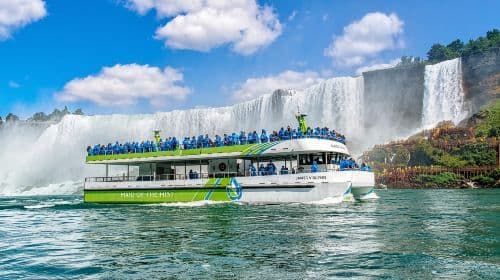
For a classic experience, the Niagara Falls USA: Cave of the Winds & Maid of the Mist Ride takes you to two of the most iconic attractions on the American side. Cave of the Winds puts you within feet of the Bridal Veil Falls on a series of wooden walkways, while Maid of the Mist takes you by boat directly into the mist of Horseshoe Falls.
For elevated views, the Niagara Falls: Tower Hotel Observation Deck Ticket offers a broader perspective of the falls and the surrounding landscape that you simply can't get from ground level.
Beyond the falls, the region has a lot to offer. The Niagara Wine Trail runs through more than 100 wineries between Lewiston and Youngstown. Old Fort Niagara, at the mouth of the Niagara River on Lake Ontario, is a well-preserved 18th-century fort with living history demonstrations. The Niagara Gorge Trail system offers serious hiking with views that rival anything in the region.
Where to Eat
The dining scene in Niagara Falls, NY is improving but still largely geared toward tourists. For better food, head to the surrounding towns.
Niagara Falls, NY: Savor on the Falls inside the state park has a solid menu and unbeatable views. The Top of the Falls Restaurant is a reliable choice for casual dining near the falls.
Lewiston, NY: This small river town about 7 miles north has a genuine local dining scene. Carmelo's Restaurant is a longtime favorite for Italian-American food. The Apple Granny is a casual spot with consistent quality and a welcoming atmosphere.
Niagara-on-the-Lake, Ontario: Peller Estates Winery Restaurant and Trius Winery Restaurant both offer farm-to-table menus paired with estate wines. These are special occasion spots with prices to match.
Budget Expectations
Niagara Falls sits in the middle range for North American destinations. Accommodation in Niagara Falls, NY ranges from around $80 per night for a basic motel to $250 or more for a hotel with falls views. Meals can be done cheaply ($10 to $15 per person at casual spots) or expensively at winery restaurants on the Canadian side ($60 to $100 per person with wine).
The main attractions add up quickly. Budget roughly $30 to $60 per person for Maid of the Mist and Cave of the Winds combined. Niagara Falls State Park itself has free entry, which is a genuine advantage over the Canadian side where parking and attraction fees are higher.
Overall, a 2-night trip for two people including accommodation, key attractions, and meals sits comfortably in the $400 to $700 range if you're being selective.
Insider Tips
1. The American side is often underrated. Most travel content focuses on the Canadian side for its panoramic views, but Niagara Falls State Park is the oldest state park in the United States and offers direct access to the falls that you simply don't get from across the border. The Niagara Falls Exclusive Walking Tour: Voyage to the Falls is a good way to get the most out of the American side with expert context.
2. Visit Goat Island at dusk. Most visitors arrive mid-morning and leave by early afternoon. Goat Island, which sits between the American and Bridal Veil Falls, becomes noticeably quieter after 5pm in summer. The light is better for photography, and you can stand at the railing above the falls with almost no one around.
3. The Niagara Gorge is largely overlooked. The gorge trail system below the falls sees a fraction of the foot traffic that the main park does. The Whirlpool State Park section, about 3 miles north of the falls, has dramatic views of the river rapids and whirlpool that most visitors never see. It's free to enter and takes about 90 minutes to walk properly.
Practical Tips
- Bring a rain poncho or expect to get soaked near the falls, especially on the Maid of the Mist and Cave of the Winds. Ponchos are provided on both attractions but wearing your own underneath helps.
- Parking near the falls fills up fast in summer. Use the state park's parking lots early or consider taking a shuttle from a further lot.
- If you're visiting both sides of the falls, do the American side in the morning and cross to Canada in the afternoon. Border wait times are typically shorter mid-week.
- Cell service can be patchy near the gorge trails. Download offline maps before you go.
The Niagara Region rewards travelers who take time to look beyond the falls. The combination of natural spectacle, wine country, historic sites, and outdoor adventure makes it a destination that works for a wide range of travel styles. Plan carefully, book key experiences in advance during summer, and you'll come away with a trip that's well worth the effort.